
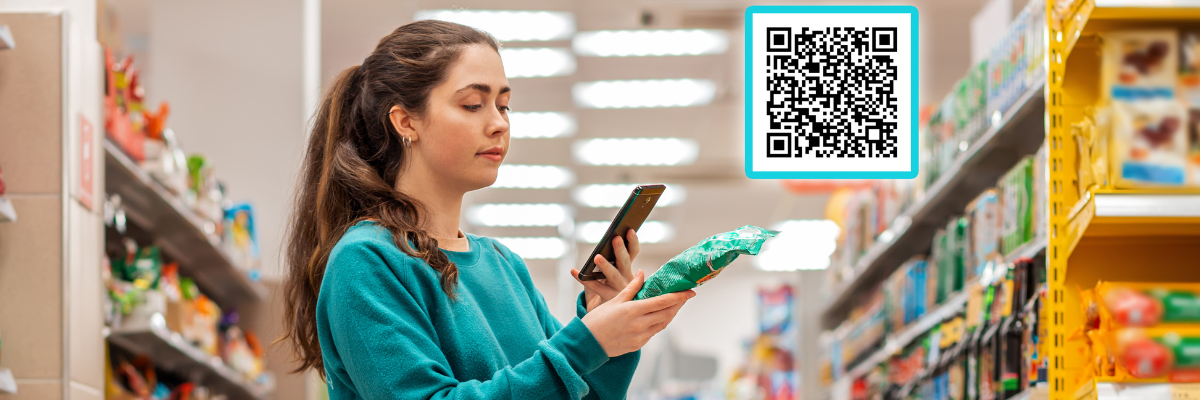
As New Zealand businesses face increasing demands for product traceability, supply chain visibility, and regulatory compliance, 2D barcodes are rapidly becoming an essential tool across manufacturing, warehousing, retail, healthcare, and food production.
For many years, detailed product tracking was primarily associated with highly regulated industries such as pharmaceuticals and food manufacturing. Today, that expectation has expanded across almost every sector. Customers, trading partners, and regulators increasingly expect businesses to know where products come from, how they move through the supply chain, and exactly which items are affected when issues arise.
This shift is driving the widespread adoption of 2D barcodes, including QR Codes and Data Matrix codes, throughout New Zealand supply chains.
Why Product Traceability Matters
Product traceability is the ability to track and trace products throughout manufacturing, warehousing, distribution, and retail environments. Effective traceability systems help businesses quickly identify affected products, improve inventory accuracy, support recalls, and maintain compliance with industry requirements.
In today's business environment, traceability is no longer limited to highly regulated industries. Customers, trading partners, and regulatory bodies increasingly expect greater transparency and accountability across the entire supply chain.
For New Zealand organisations, implementing robust traceability processes can help:
- Improve inventory visibility
- Reduce manual data entry errors
- Support quality assurance programmes
- Respond rapidly to product recalls
- Enhance customer confidence
- Meet growing compliance requirements
- Strengthen supply chain resilience
The Limitations of Traditional Barcodes
|
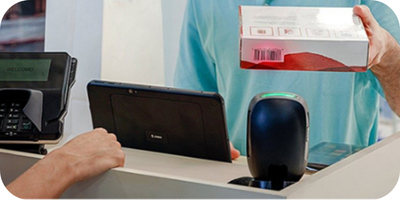
For decades, 1D barcodes have been the standard method of product identification. While highly effective for basic product scanning, traditional barcodes have limited capacity and typically only contain a single product identifier. Additional information such as batch numbers, expiry dates, serial numbers, manufacturing data, and traceability records must be stored separately within business systems. As traceability requirements become more sophisticated, organisations need a more powerful and flexible identification technology. |
 |
What Are 2D Barcodes?
Unlike traditional barcodes, 2D barcodes can store much larger amounts of information within a compact label space.
Common 2D barcode formats include:
- QR Codes
- GS1 DataMatrix
- GS1 Digital Link QR Codes
Depending on the application, a 2D barcode can store:
- Product identification numbers (GTINs)
- Batch and lot numbers
- Manufacturing dates
- Expiry dates
- Serial numbers
- Asset identifiers
- Country of origin information
- Digital product information
- Website links and customer resources
This additional data supports greater visibility across the supply chain while reducing reliance on manual processes.
How 2D Barcodes Improve Compliance and Operational Efficiency
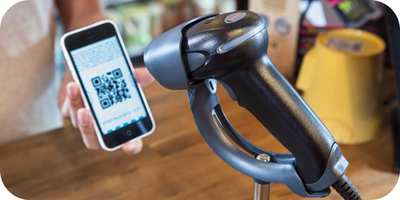
Many organisations are transitioning to 2D barcodes because they provide more detailed and accurate product information at the point of scan.
This enables businesses to:
- Track products at batch or item level
- Improve recall management processes
- Reduce inventory discrepancies
- Improve warehouse accuracy
- Support product authentication initiatives
- Provide enhanced customer transparency
- Prepare for future industry and trading requirements
By capturing richer data directly within the barcode, businesses can reduce manual intervention and improve overall supply chain performance.
Applications Across New Zealand Industries
Food and Beverage Manufacturing
Food producers can leverage 2D barcodes to store batch numbers, production dates, and expiry information, making it easier to manage food safety requirements and product recalls.
Healthcare and Medical Supply Chains
Hospitals, healthcare providers, and medical suppliers rely on accurate product identification to improve patient safety, inventory control, and regulatory compliance.
Retail and E-commerce
Retailers can increase product visibility, improve stock accuracy, and provide customers with access to additional product information through QR Code-enabled experiences.
Warehousing and Logistics
Distribution centres and logistics providers benefit from faster receiving, improved stock traceability, and more accurate shipment tracking.
The Future of Barcode Technology
Globally, organisations are moving towards next-generation barcode standards that support richer data and enhanced traceability. As supply chains become increasingly digital, businesses that invest in modern barcode technologies today will be better positioned to meet future customer and industry expectations.
The transition to 2D barcodes is not simply about compliance. It is about creating smarter, more connected operations that deliver greater visibility, efficiency, and control.